Premium Gravel Driveway Installation Done Right in Southwest Missouri
Most people think installing a gravel driveway is simple - dump some rock, spread it out, done. But that approach is exactly why so many driveways end up soft, rutted, and washed out after the first big rain. There's a lot more to it if you want something that actually holds up.
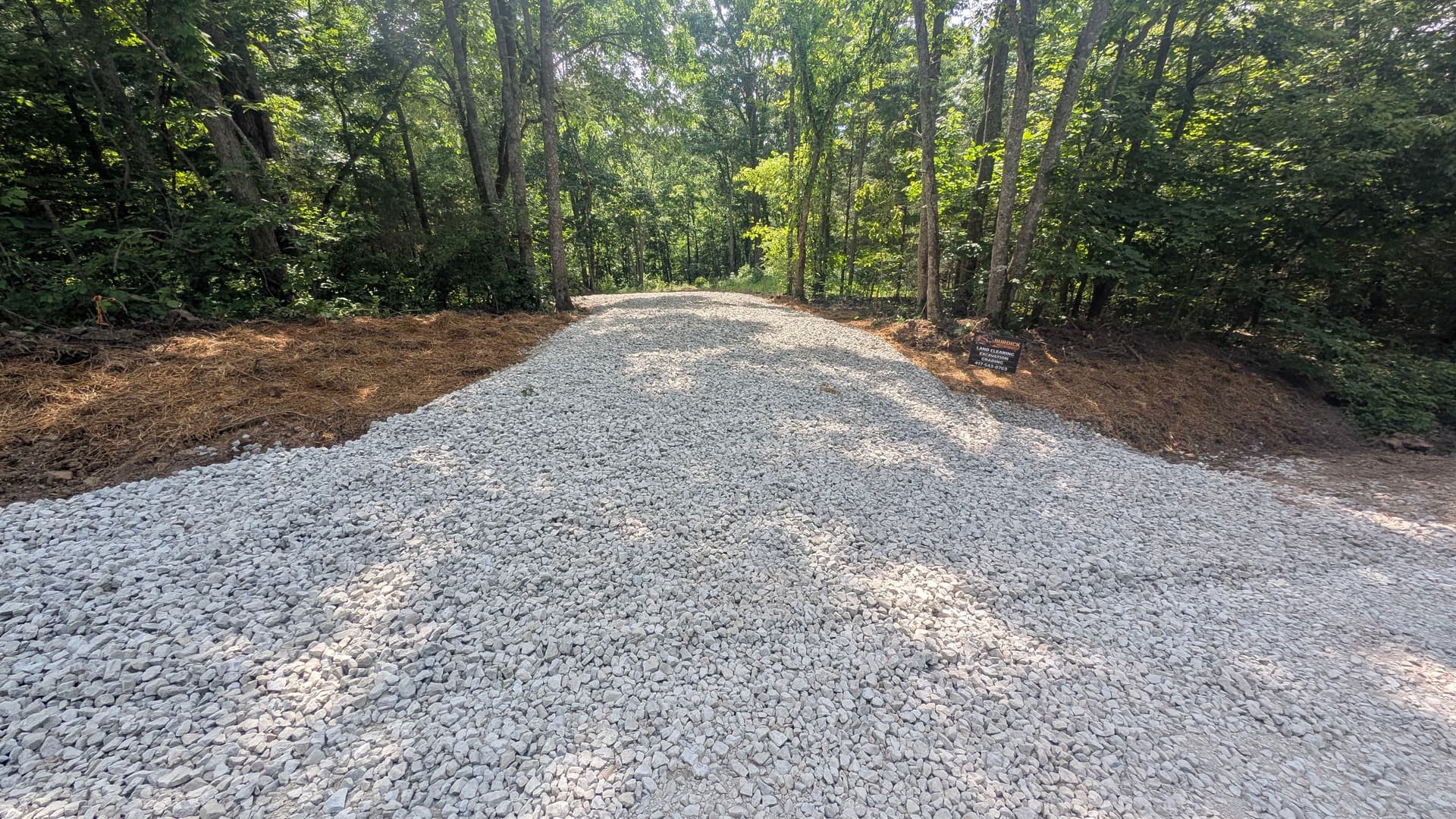
On this Southwest Missouri driveway installation, we started with full geotextile fabric laid throughout the entire drive. That fabric sits between the base rock and the native soil underneath - and it's doing a lot of quiet, invisible work. It keeps the stone from sinking into the ground over time, improves drainage, and helps the whole structure stay stable under load. It's one of those steps that separates a driveway that lasts from one that needs constant attention.
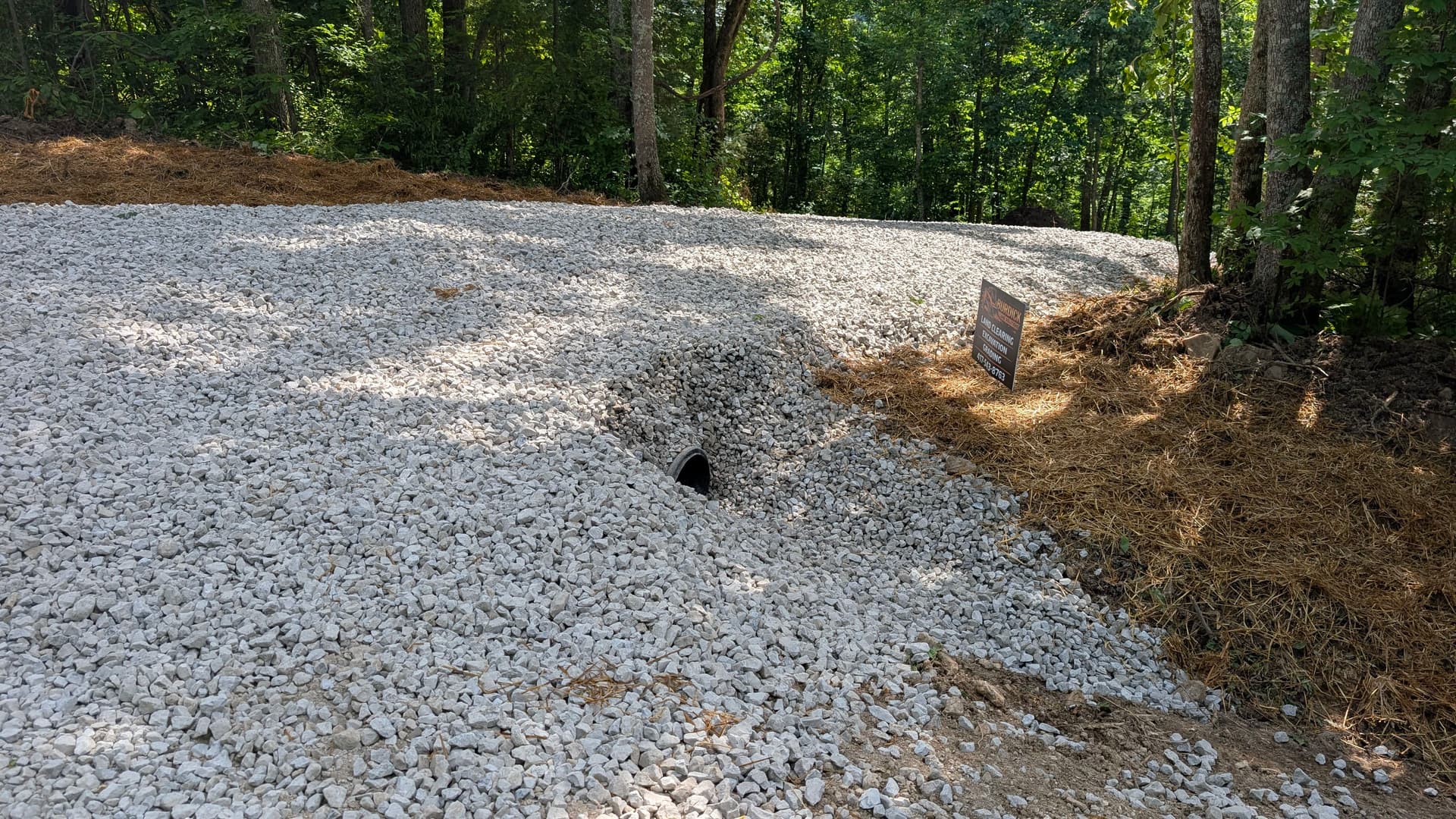
The driveway got topped with 2" clean rock, which packs and drains well without holding moisture underneath. At the entrance, we set a 15" culvert to handle water flow where it needs to move - that's critical in areas that see heavy rain. Without it, you're just watching your driveway wash away every time a big storm rolls through. The culvert keeps water moving in the right direction and protects the structure of the driveway at its most vulnerable point.
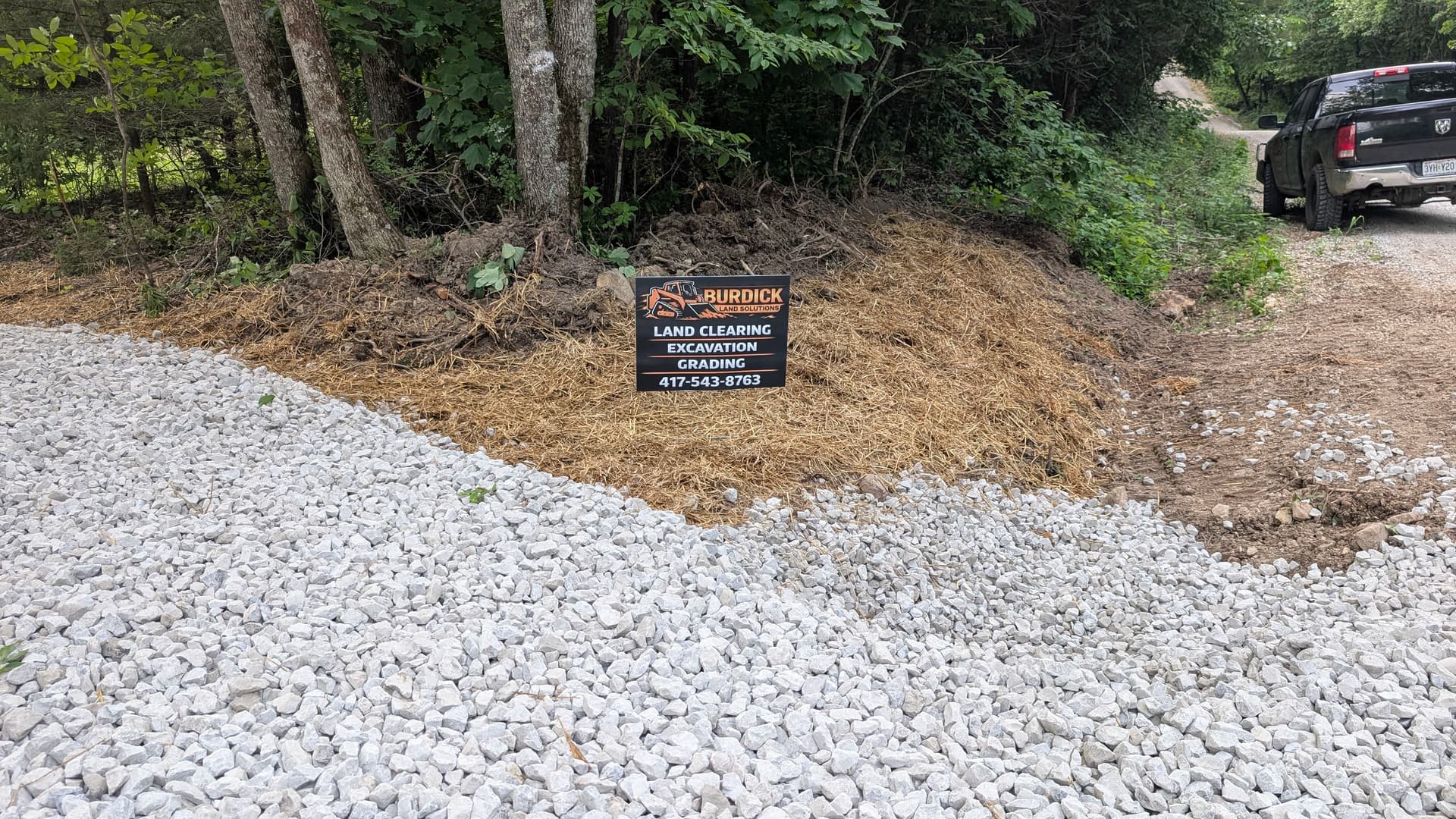
Once the rock work was finished, we didn't just walk away and leave a muddy mess around the edges. The disturbed soil on both sides of the drive got dressed with straw and seed to stabilize the ground, cut down on erosion, and leave the property looking clean and finished. It's a detail a lot of contractors skip - but it matters, both for the look of the property and for keeping loose soil out of the driveway long-term.
Site preparation, proper drainage, and the right materials from the start - that's what makes the difference between a driveway that works and one that becomes a recurring problem. If you're dealing with soft spots, washouts, or just want a new drive put in the right way, this is the kind of work we do across Southwest Missouri.