Pond Bank Brush Clearing Done Right with Forestry Mulching
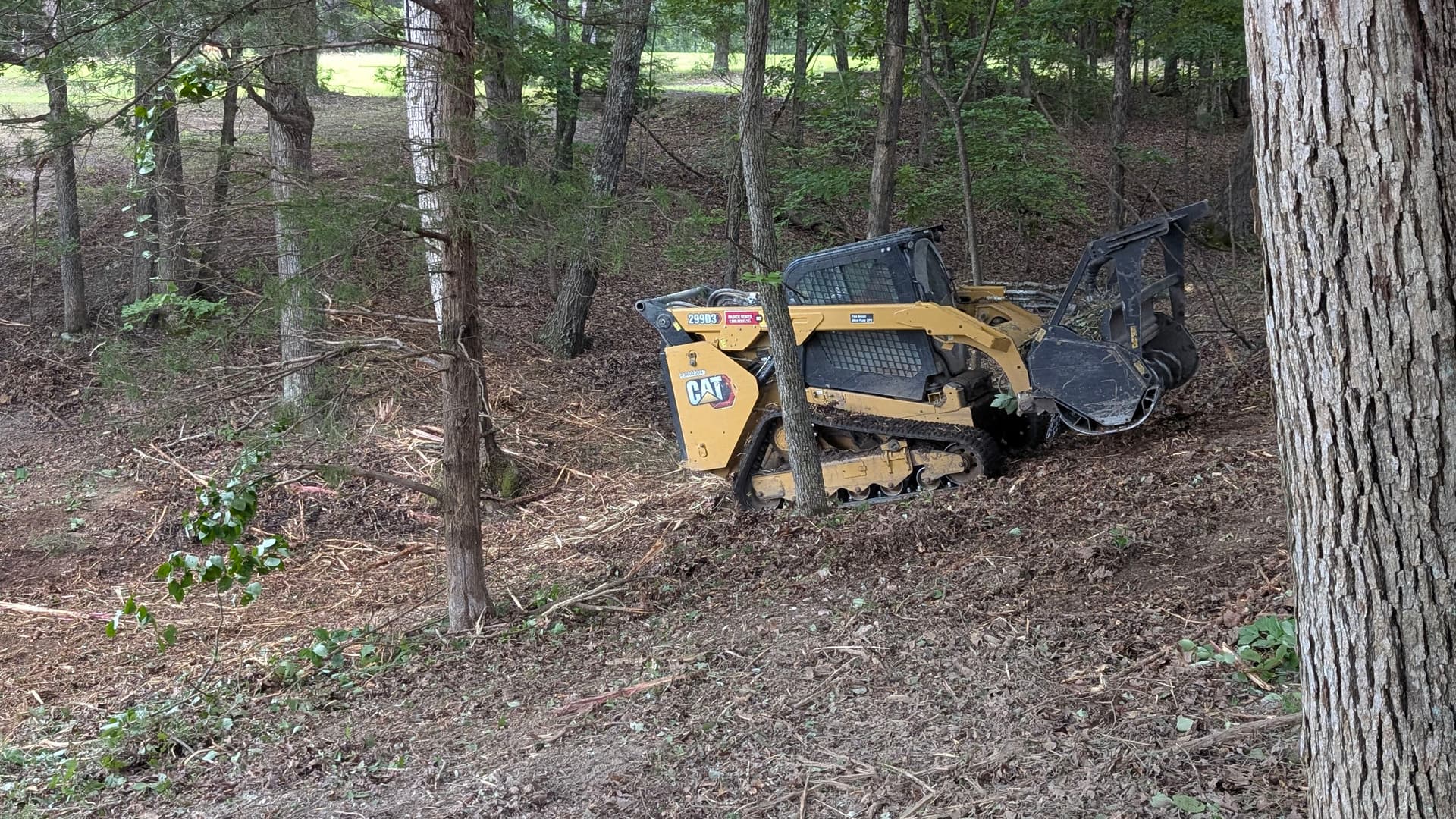
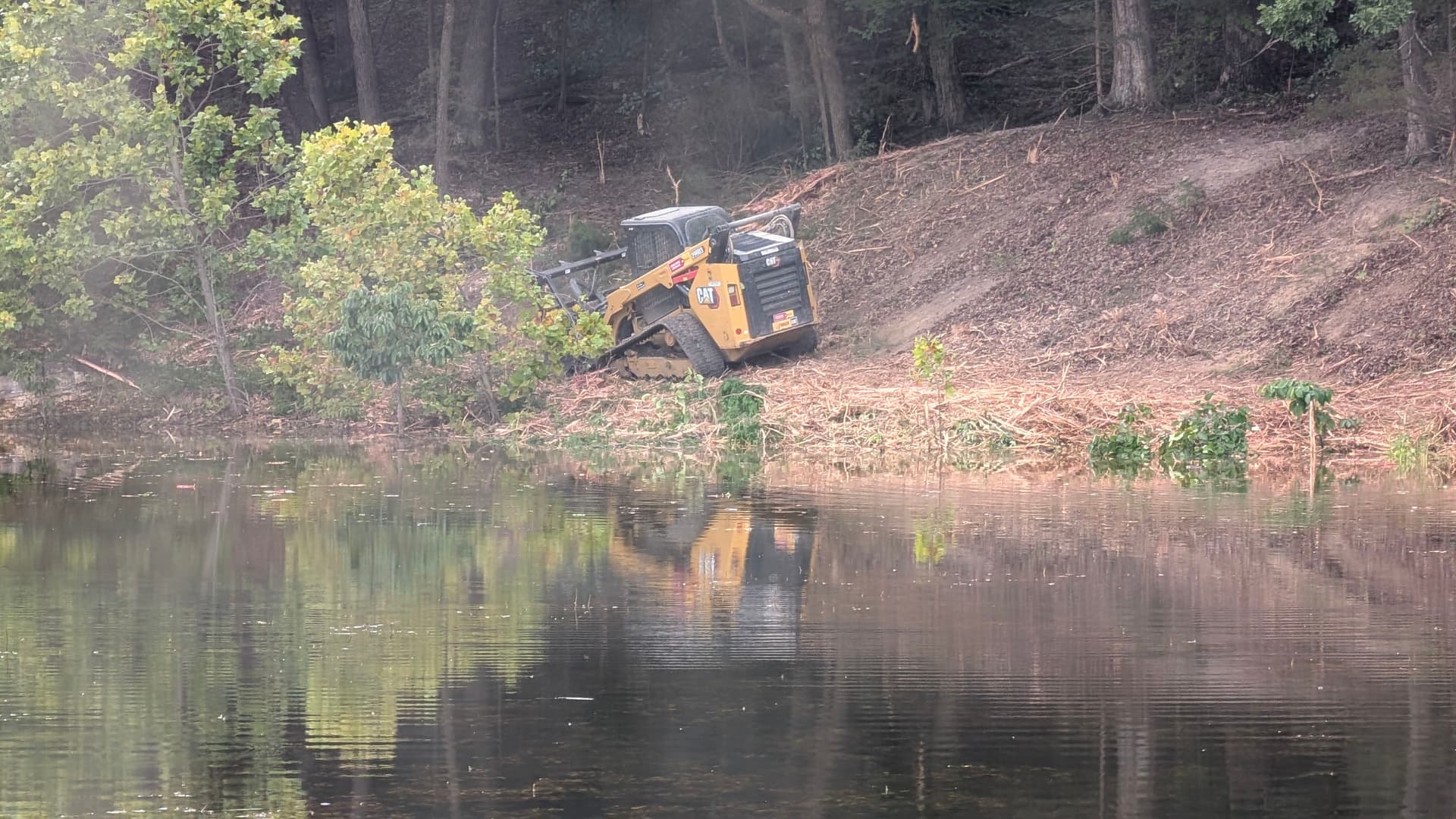
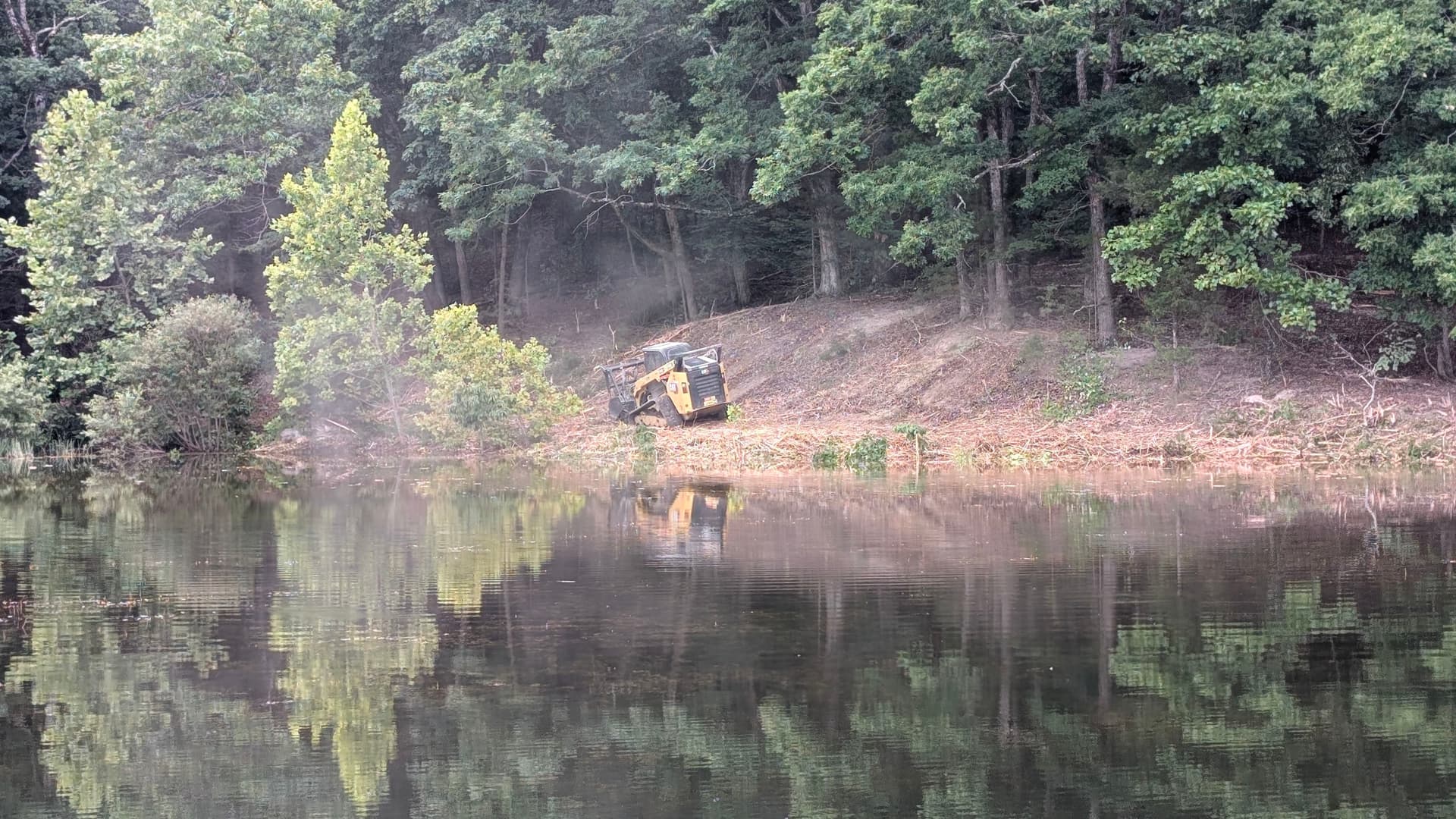
Pond banks are one of those areas that get out of hand fast. Dense brush, overgrown shrubs, and tangled undergrowth creep right down to the water's edge - and before long, you can't even get to the shoreline. It becomes a maintenance headache and an eyesore all at once.
That's exactly the kind of situation where forestry mulching shines. We run a CAT skid steer with a forestry mulching head, and it's built for this work. It handles steep, uneven ground along the water's edge - the kind of terrain that would be a nightmare to tackle by hand or with standard equipment. The machine chews through brush, small trees, and thick vegetation and leaves behind a layer of fine mulch right on the ground.
No hauling. No burn piles. No tearing up the bank. That's the big difference between forestry mulching and a traditional brush clearing approach. The mulch that gets left behind actually helps hold the soil in place, which matters a lot on a slope running down to water. You get a clean, open bank without the erosion risk that comes from stripping it bare.
The result is a shoreline you can actually use and access. Whether you're managing a private pond, a farm pond, or a larger property with water frontage, keeping those banks clear makes a real difference - for maintenance, for aesthetics, and for the long-term health of the bank itself. Once it's cleaned up, it's also a whole lot easier to stay on top of going forward.