Gravel Driveway Installation with Heavy-Duty Erosion Control
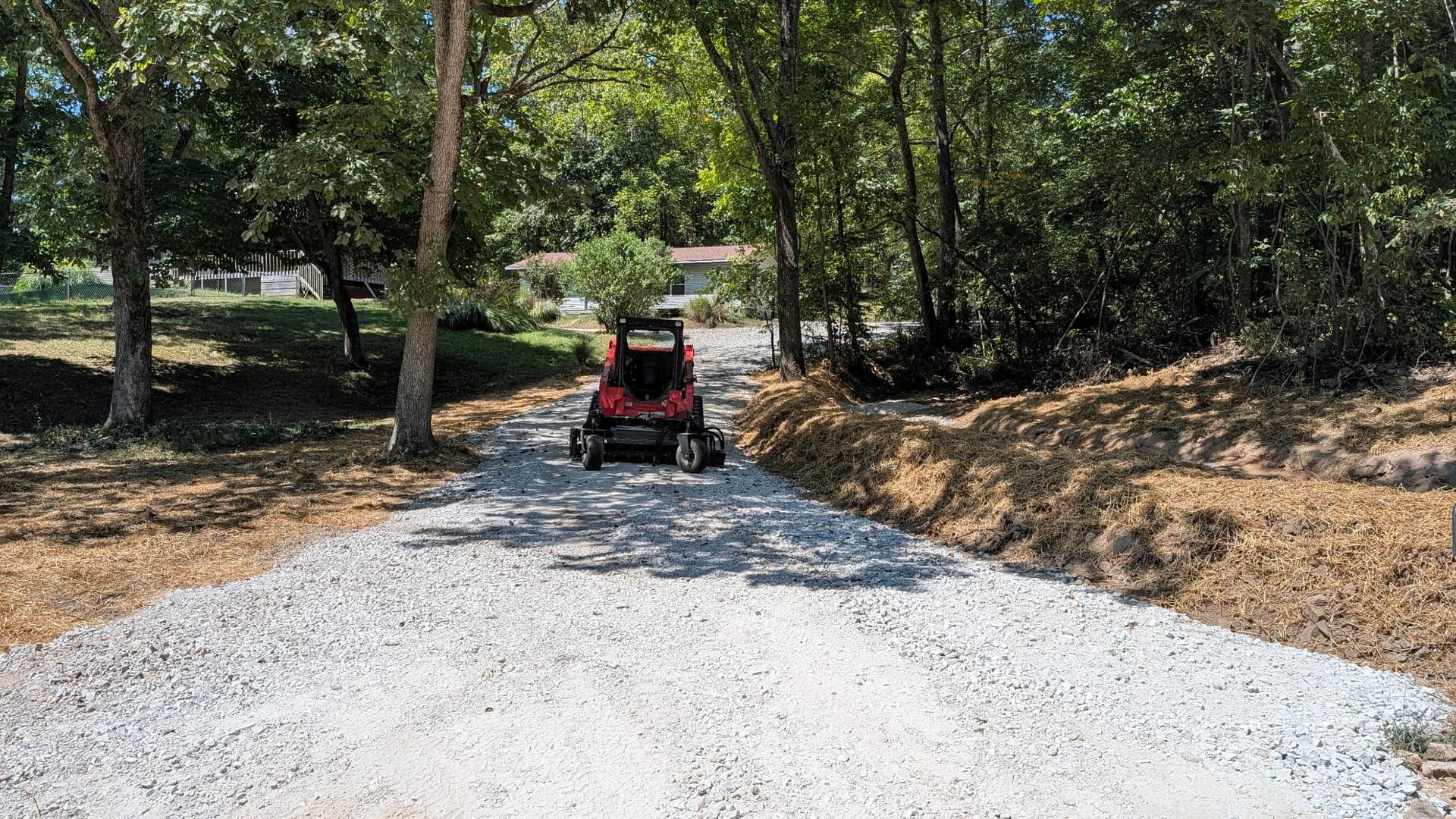
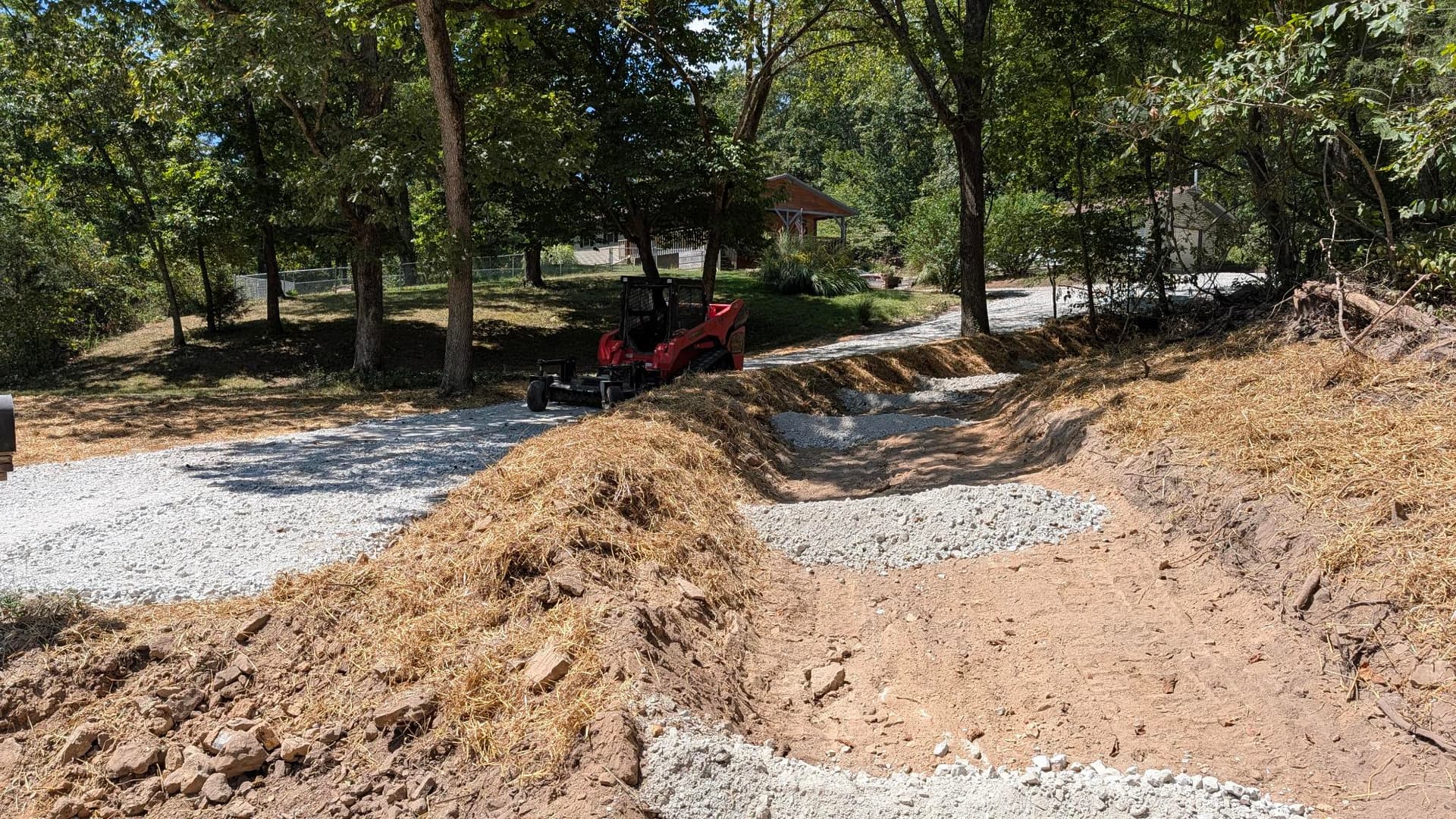
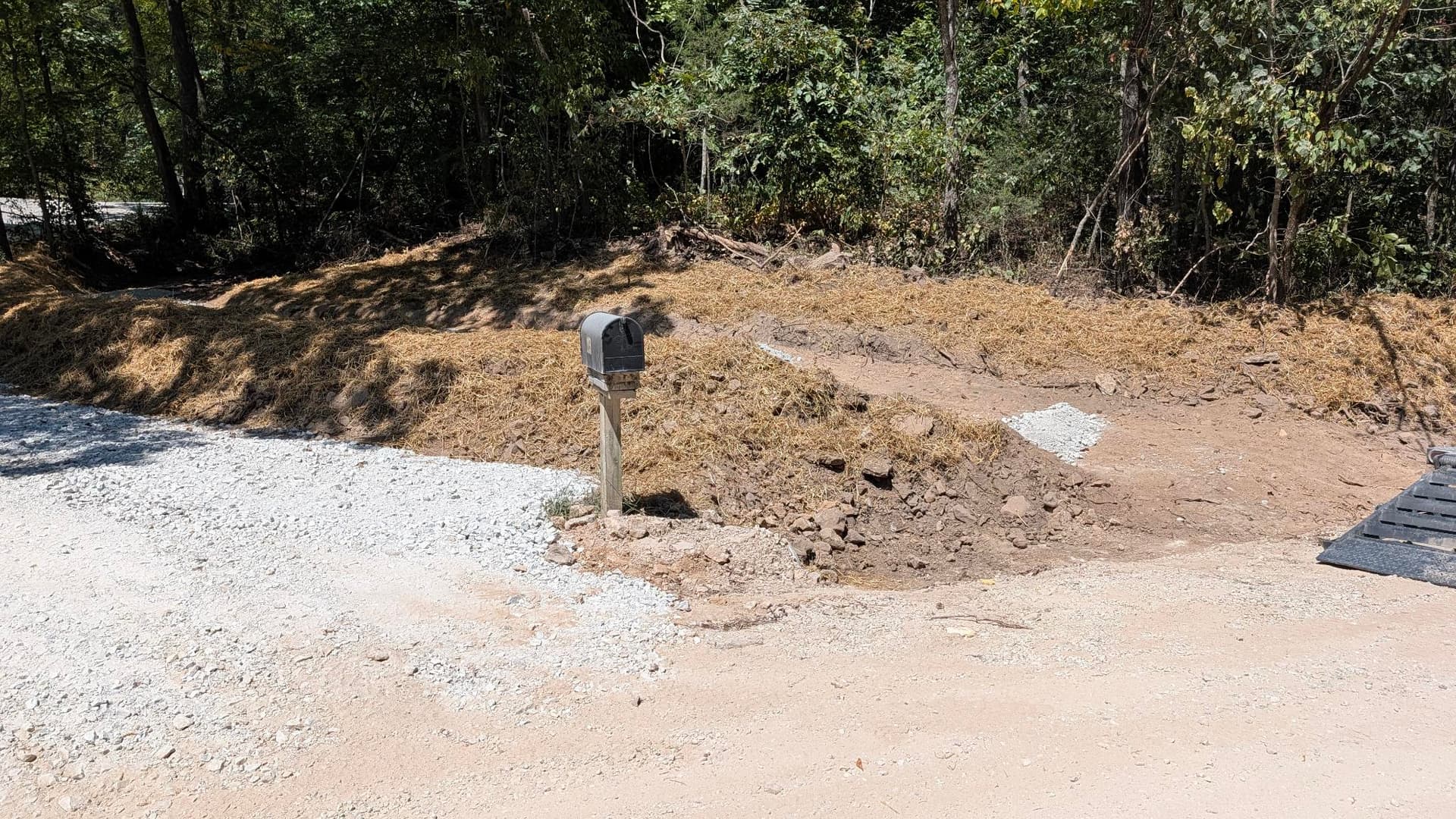
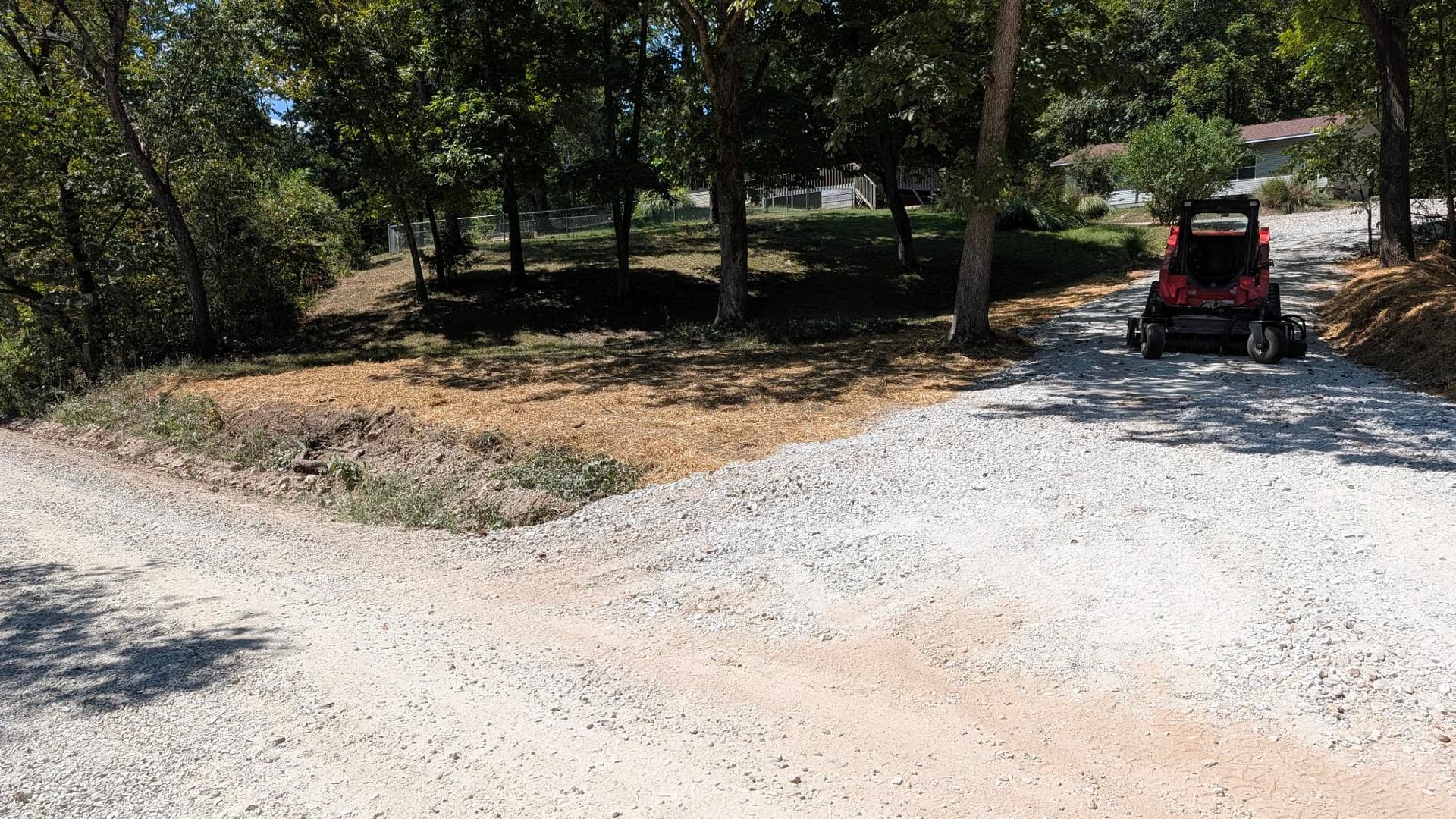
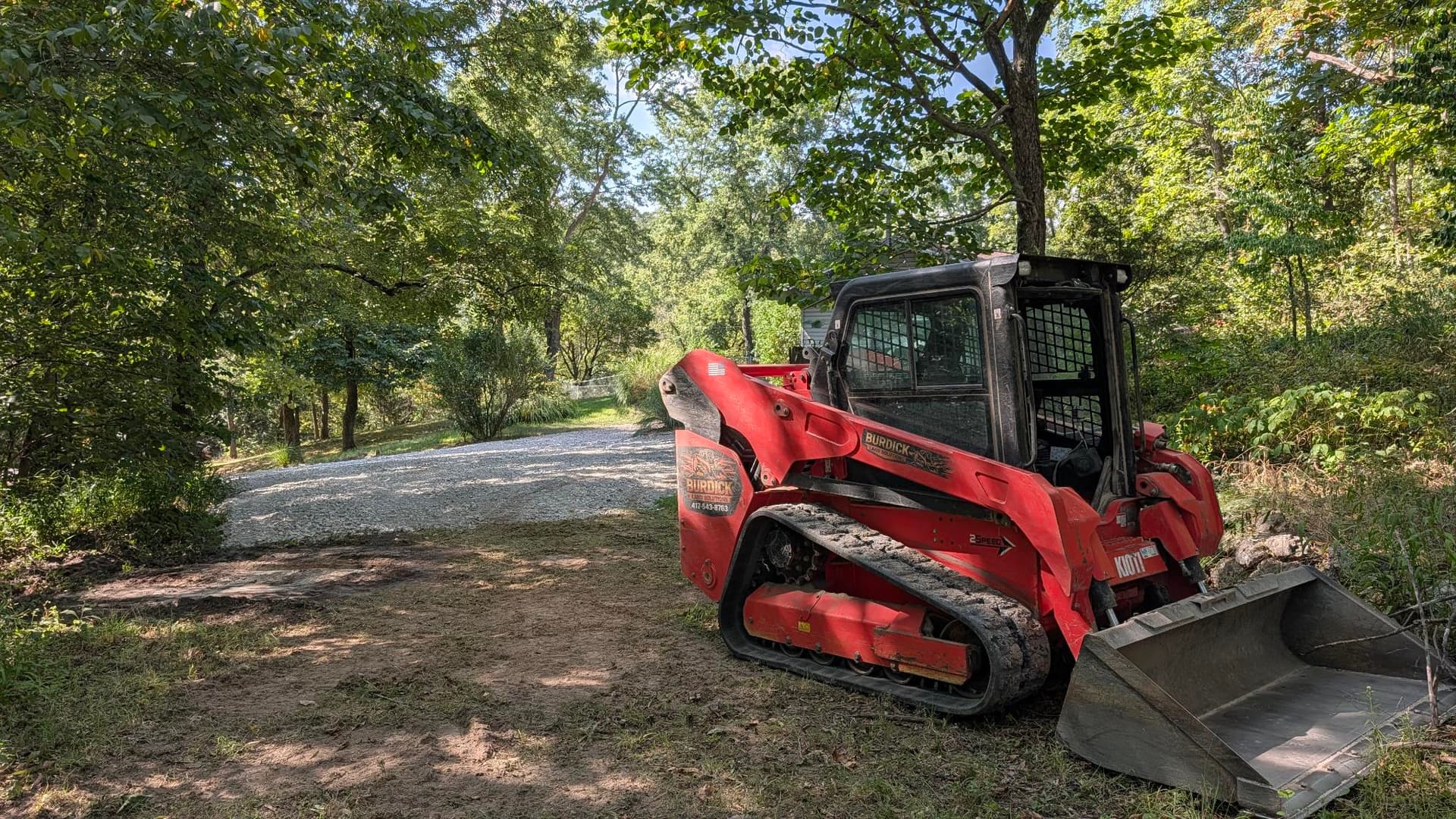
This one had some real challenges baked in from the start. The property sits on a sloped, wooded lot with exposed soil banks on both sides of the drive - exactly the kind of setup where, if you skip the erosion work, you're going to be chasing your gravel down the hillside every time it rains.
We don't cut corners on erosion control, and this job is a good example of what it looks like when you actually do it right. The cut banks along the driveway edges were graded out and packed with straw to hold the soil in place while ground cover establishes. It's not glamorous work, but it's the difference between a driveway that holds up and one that washes out after the first hard storm.
The finished gravel surface runs the length of a long, winding wooded drive and opens up into a wider turnaround area near the house. Getting a nice even spread on a property like this - with trees, grade changes, and tight spots - takes patience and the right equipment. We ran the skid steer through multiple passes to get the base compacted and the gravel sitting the way it should.
Erosion protection on a job like this isn't an afterthought. It's built into the plan from day one. When you've got disturbed soil on both sides of a new drive, straw matting on the banks keeps everything in place until vegetation takes over. We went heavier on it than we had to - because that's just how we approach work that needs to last.
Gravel driveway installation done well is about more than just dumping rock and spreading it around. It's about understanding drainage, protecting the surrounding soil, and building something the customer won't have to call us back about in six months. That's what we aim for on every single job.