Gravel Driveway Install and Refresh Near Sweden Missouri
Gravel driveways take a beating. Ruts form, gravel migrates to the edges, and before long you've got bare dirt tracks that turn into a muddy mess every time it rains. That wear and tear adds up - both on the driveway itself and on your vehicle.
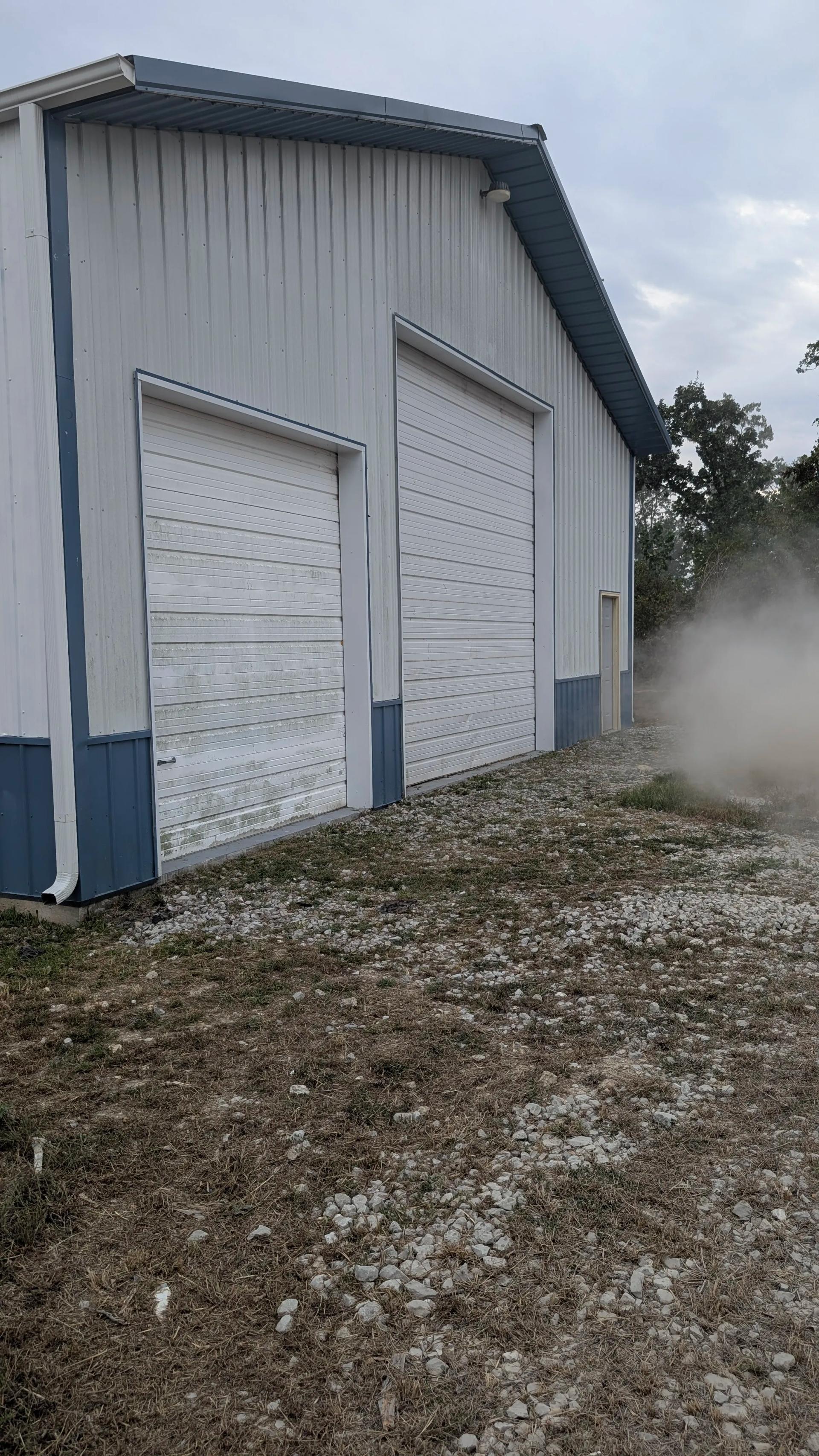
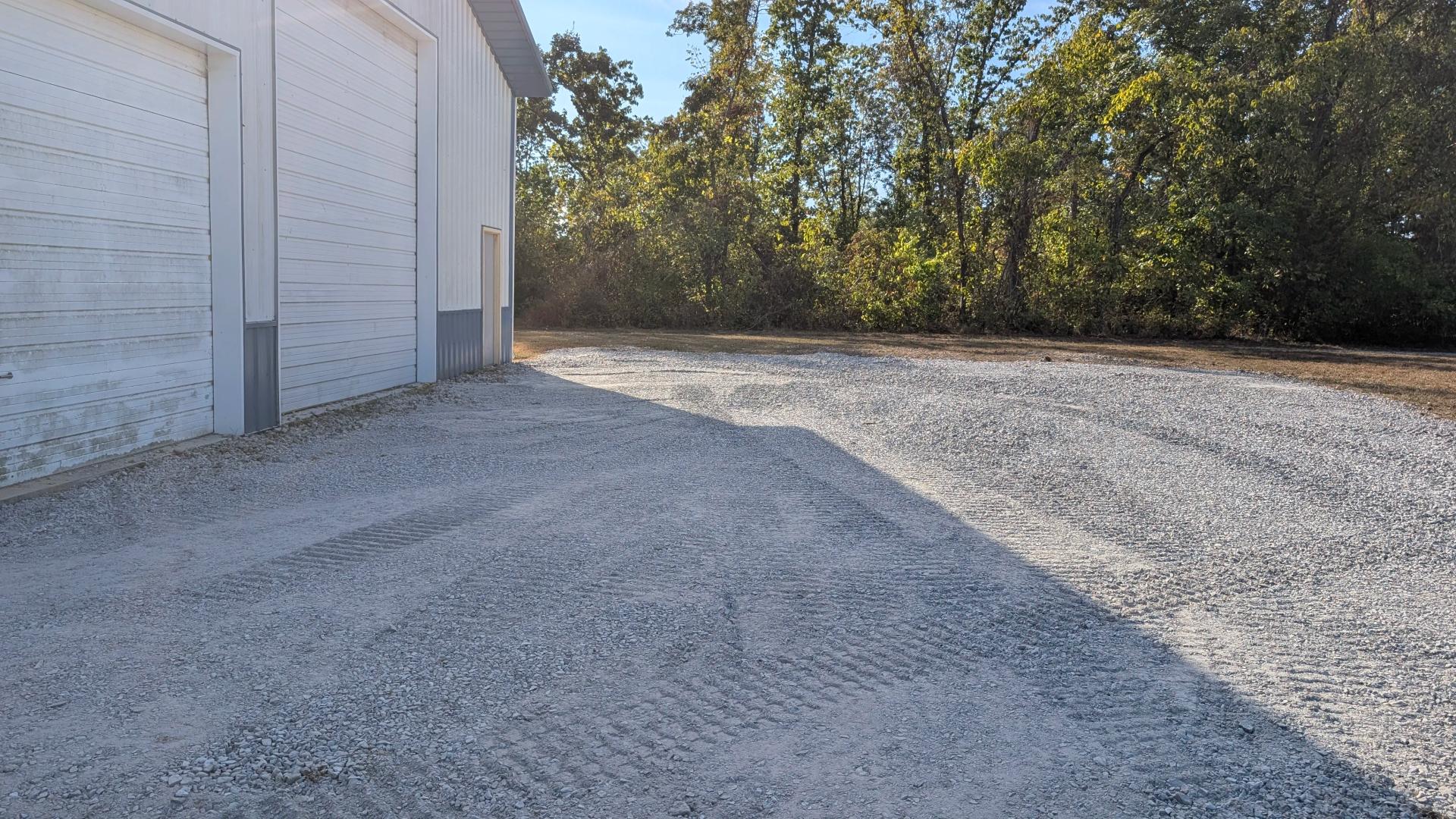
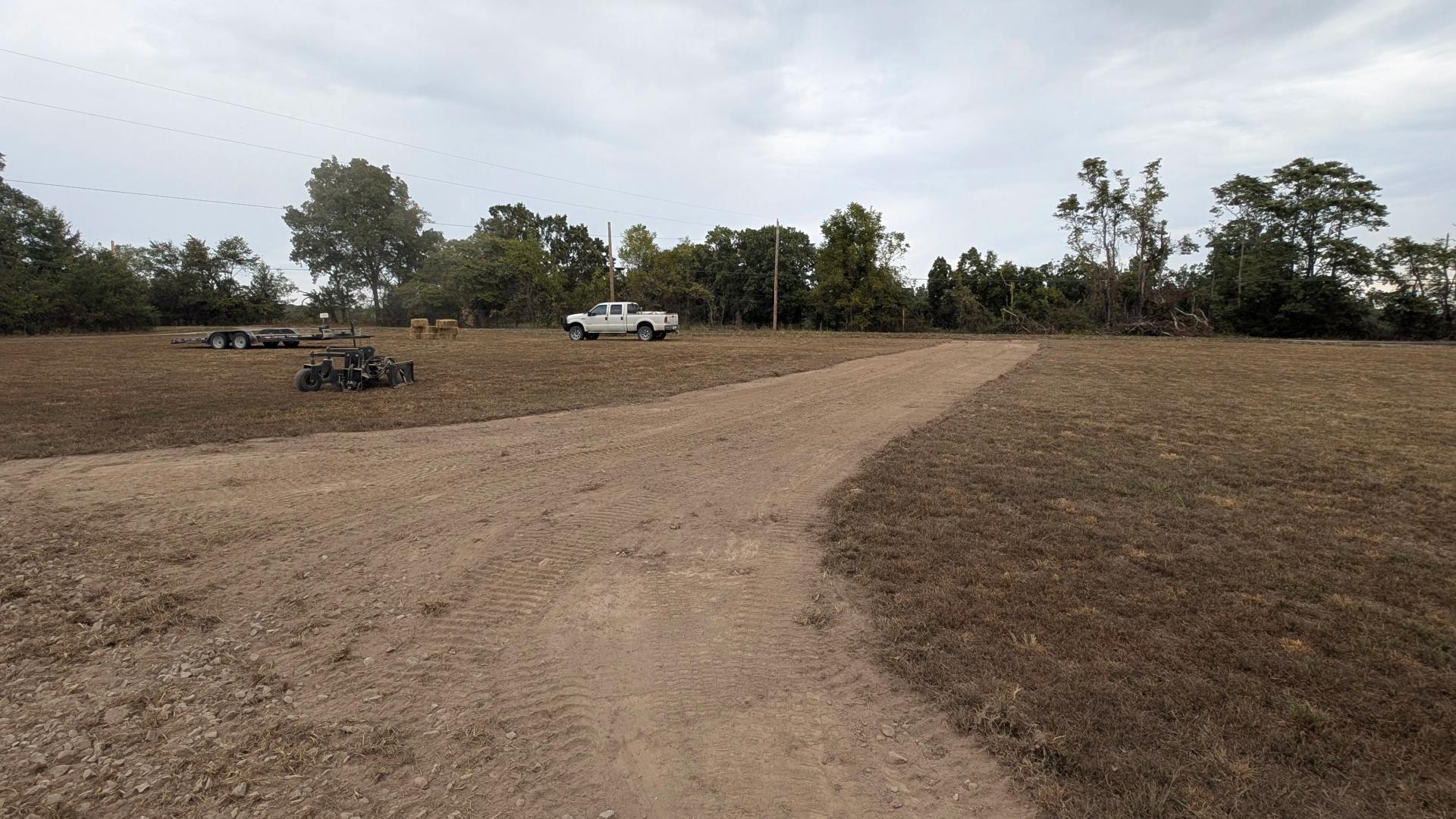
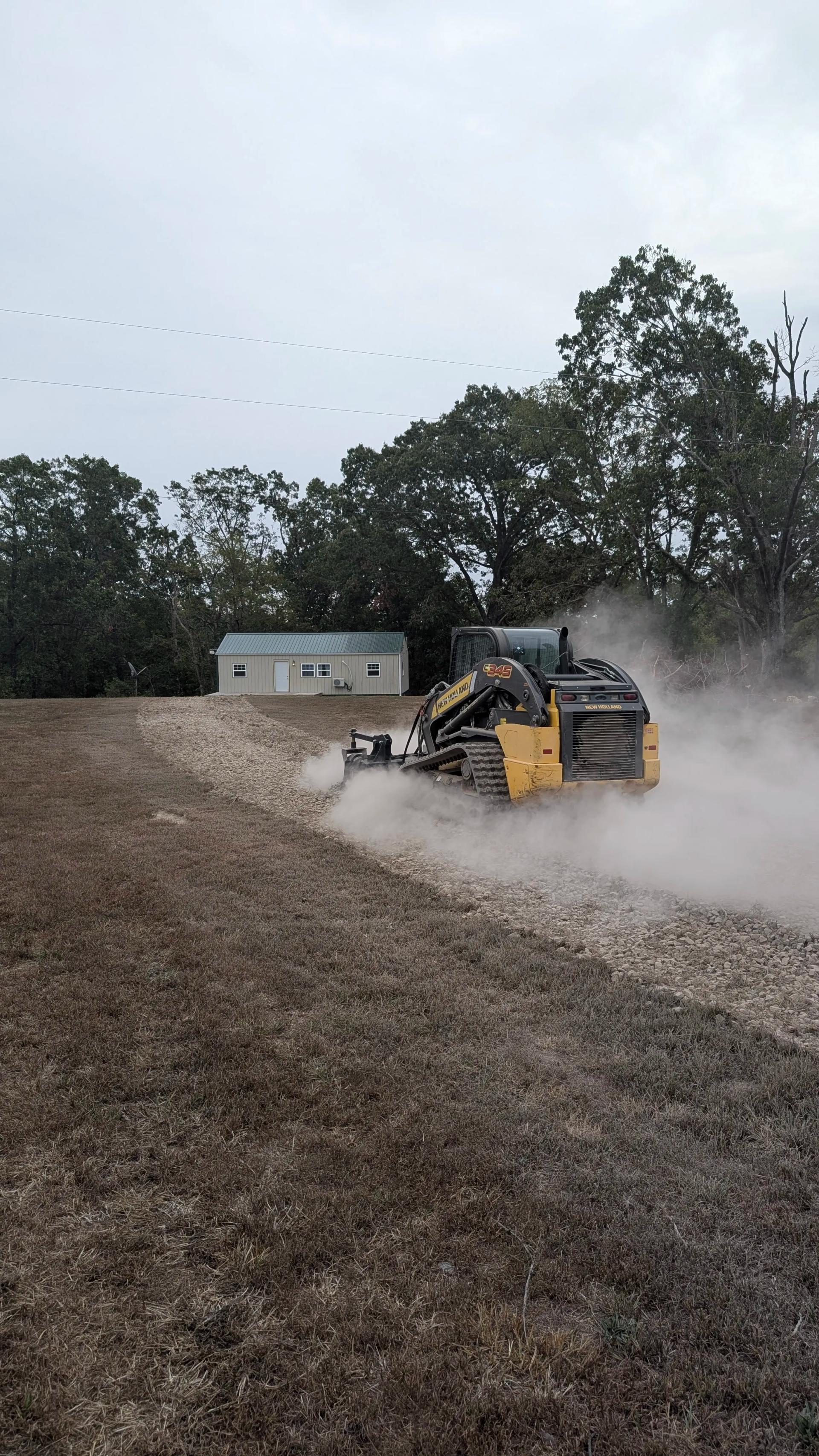
This one out near Sweden, Missouri needed work on two fronts. The long entry drive coming off the highway was bare dirt and needed a full gravel installation from scratch. The area in front of the shop building had gravel, but it had thinned out and gotten rough. Both needed attention.
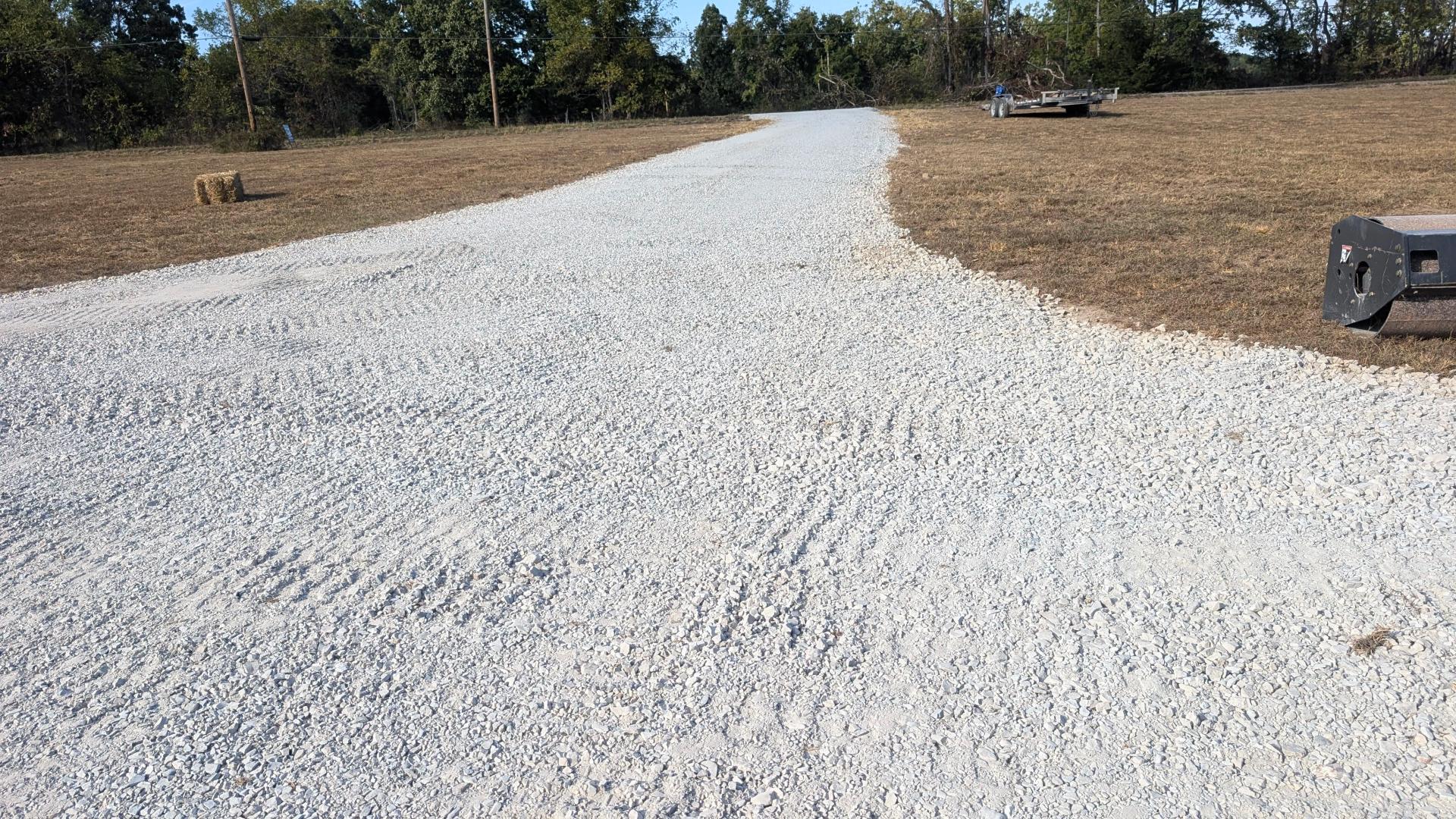
We started by grading the entry drive to get a solid, even base before any gravel went down. Getting the grade right matters more than most people realize - it's what keeps water moving off the drive instead of pooling and creating soft spots. Once the base was set, we brought in fresh gravel and spread it out clean and even the full width of the drive. The shop area got a fresh top layer spread and graded smooth, filling in the thin and worn spots.
The difference is night and day. A properly graded gravel drive gives you solid footing in every kind of weather, cuts down on the dust and mud that gets tracked everywhere, and keeps your vehicles from taking unnecessary abuse every time you pull in and out. It also just looks sharp - a clean gravel surface says the property is well kept.
Whether you need a brand new gravel drive put in or an existing one brought back to life, the process is straightforward when it's done right. Good grading, the right material, and proper spreading makes all the difference between a drive that holds up and one that's back to being a problem in a few months.