Forestry Mulching Clears Dense Overgrowth on Hilly Rural Property
When land gets thick with brush and woody overgrowth, it stops working for you. It becomes something you manage around instead of something you actually use. That's a common situation for rural landowners - especially on hilly terrain where dense growth takes over fast and conventional equipment struggles to get through.
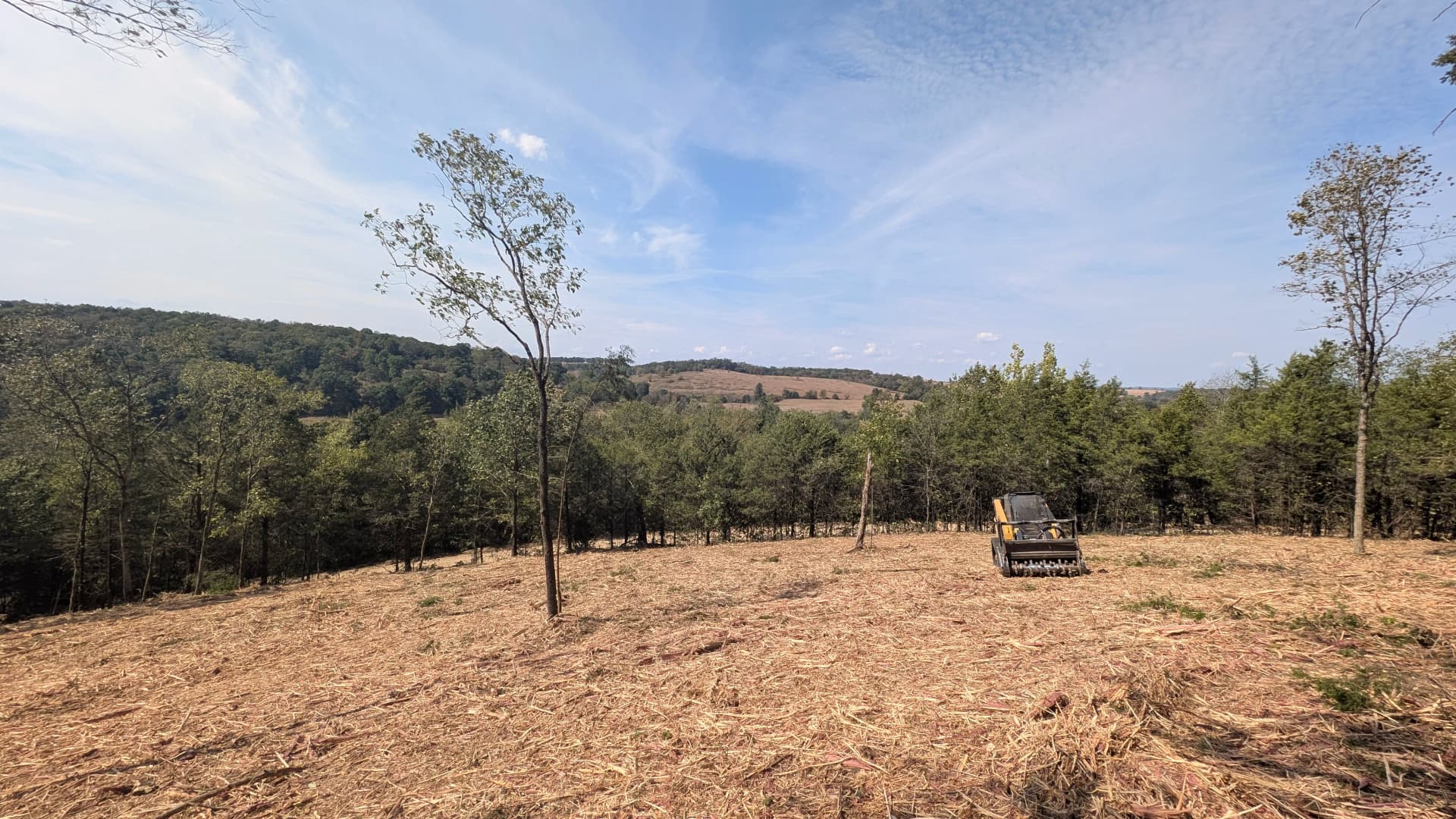
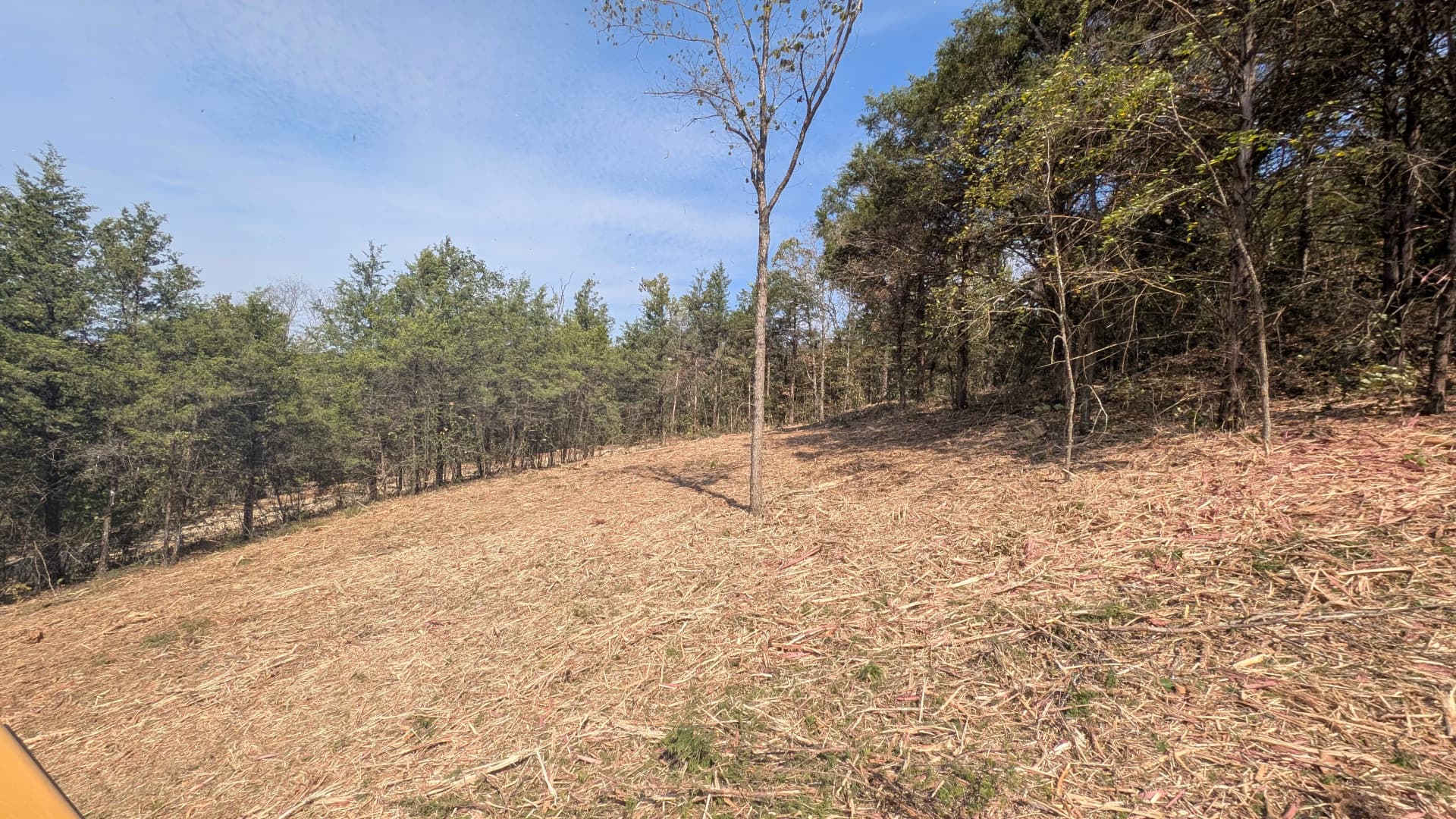
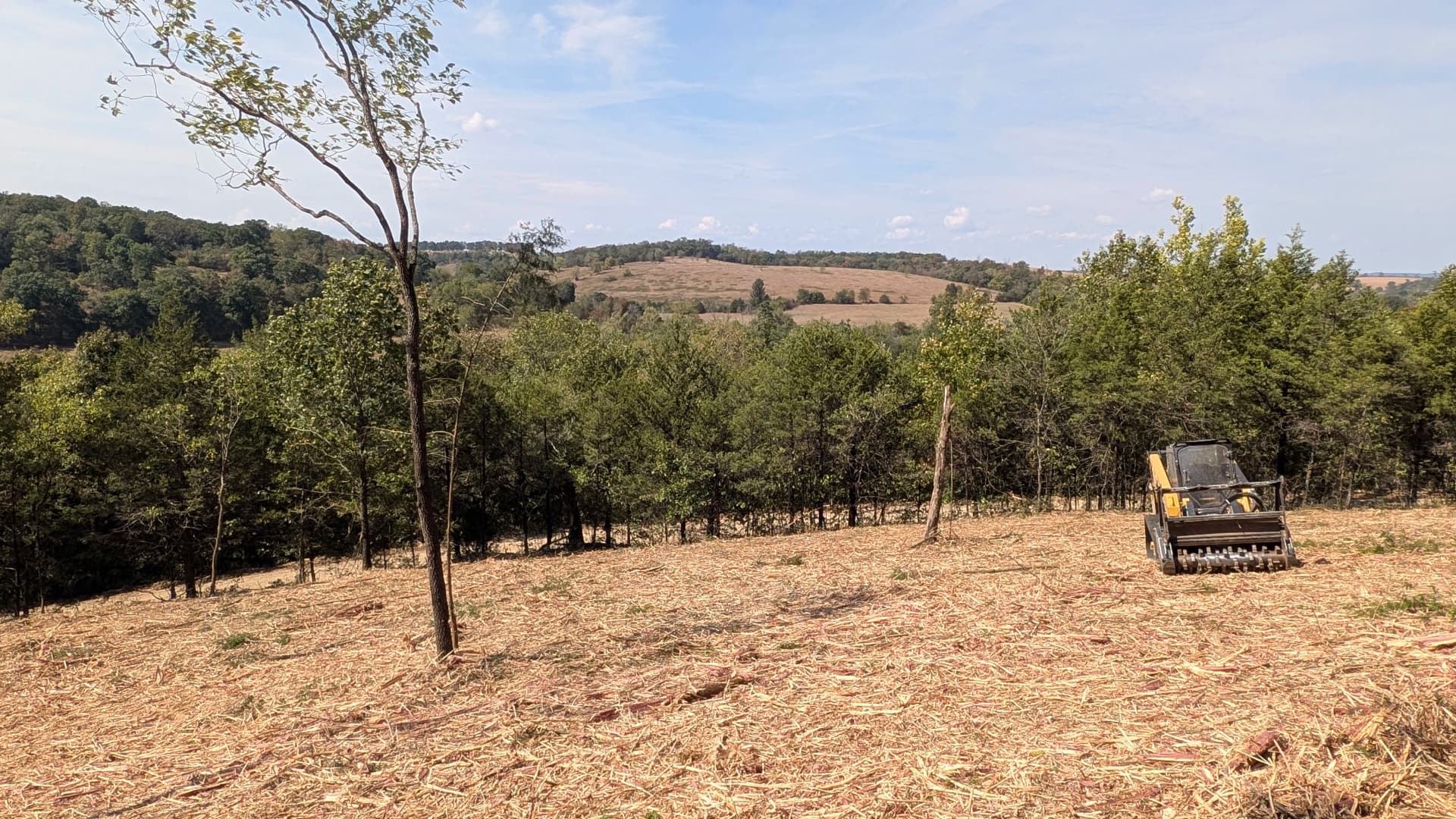
That's exactly what we were dealing with here. Heavy brush and thick understory covered a sloped hillside that clearly had some real potential underneath it all. The mulcher went to work chewing through everything - saplings, shrubs, woody debris - and grinding it all down into a clean layer of mulch right on the ground. No hauling, no burning, no massive cleanup operation after the fact.
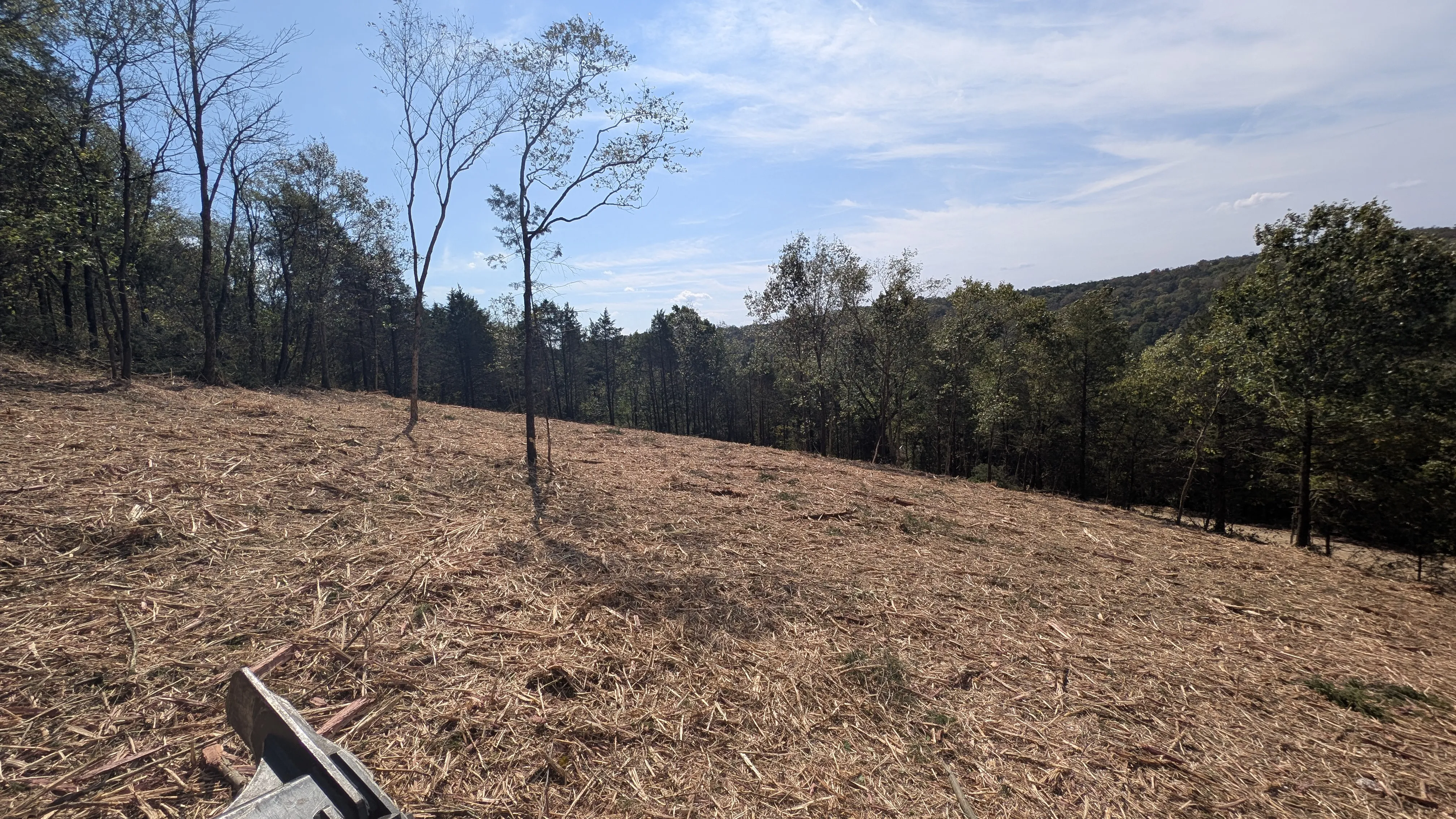
That's one of the biggest advantages of forestry mulching over other land clearing methods. The material stays on-site as a natural ground cover. It holds moisture, helps with erosion on slopes like this one, and breaks down over time to feed the soil. You're not just clearing land - you're leaving it in better shape than you found it.
The results speak for themselves here. What was once an overgrown mess on a rolling hillside is now open, accessible ground with a solid mulch base. You can see all the way across the cleared area, and the mature trees that were worth keeping are still standing. That kind of selective clearing takes experience and the right equipment - not just horsepower.
If your property has gotten too thick to manage or you've got land you want to actually start using, forestry mulching is one of the most efficient ways to get there. It works on flat ground, slopes, and everything in between.